
Blur to Evidence: Video Enhancement Software in Criminal Cases
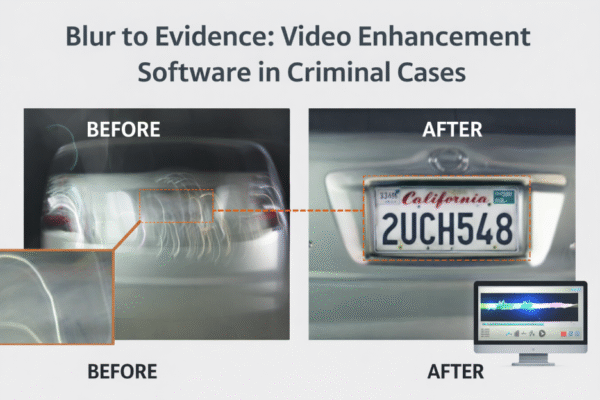
Surveillance video is everywhere. Stores, streets, offices, parking lots. Yet when investigators finally review the footage, the details they need are often missing. Faces look soft. License plates smear into light streaks. Motion turns people into shadows. This is where video enhancement software changes everything.
In criminal cases, blur is not just an inconvenience. It can block the truth. The goal of forensic video work is simple: turn unclear footage into usable evidence, without guessing or altering facts. That’s why video deblurring software has become a core tool for forensic experts.
Why Blur Happens in Criminal Footage
Most security cameras are not built for perfect conditions. They work in low light. They capture fast movement. They sit far away from the action. All of this creates blur.
There are a few common causes. Motion blur happens when a subject moves faster than the camera can capture. Focus blur appears when the lens is not set correctly. Compression blur comes from heavy video encoding. Each type hides details in a different way.
In criminal cases, these problems stack up. A suspect runs. A car speeds away. The camera struggles to keep up. What’s left is footage that looks useless at first glance.
The Role of Video Enhancement Software
This is where video enhancement software steps in. Unlike consumer editing tools, forensic software is built for accuracy. The goal is not to make the video look nicer. The goal is to reveal real details that already exist in the data.
Good forensic tools work frame by frame. They preserve original files. They document every step. This matters in court. Investigators must explain how evidence was processed and why the results are reliable.
Deblurring is one of the most important functions inside these tools. Without it, key evidence may never be seen.

Why Deblurring Is a Forensic Staple
Deblurring is not new. But forensic deblurring is very different from what you see in photo apps. In criminal work, assumptions can ruin a case. The process must be grounded in science.
That’s why deblurring is a staple in forensic image and video processing software. It helps investigators recover edges, shapes, and movement patterns that were hidden by blur. When done correctly, it can reveal faces, objects, or actions that were unclear before.
This is where video deblurring software earns its value. It focuses on restoring lost information, not inventing it.
CSI Deblur: A Smarter Way to Remove Blur
Cognitech Video Investigator approaches deblurring in a unique way. One standout feature is CSI Deblur, designed for known crime scenes with unknown blur.
Here’s the challenge. Investigators often have clear photos of the crime scene taken later. But the surveillance video was captured earlier, under poor conditions. The blur in the video does not exist in the still images.
CSI Deblur uses those crime scene photos to solve the problem. It analyzes the scene geometry and uses that information to estimate the blur pattern, also known as the blurring Kernel PSF. This kernel describes how the blur was created in the original footage.
Once the blur model is known, the software applies it to the video. The result is a clearer reconstruction of objects and subjects, even if they are no longer present in the scene.
This science-driven method separates forensic tools from basic video editors.
From Blurred Frames to Real Leads
In criminal cases, small details matter. A logo on a jacket. A mark on a vehicle. The direction someone turned. These details can connect suspects, locations, and timelines.
With advanced video enhancement software, investigators can isolate frames, reduce blur, and enhance visibility while keeping the evidence intact. This can turn a vague clip into a meaningful lead.
For example, a blurred figure near a crime scene may suddenly show posture or clothing details. A smeared car may reveal shape or movement patterns. Even when faces remain unclear, these details help narrow investigations.
See Cognitech Video Investigator in Action
Discover CSI Deblur and the forensic deblurring tools that turn blurred frames into court-ready evidence.
Click HereWhy Accuracy Matters More Than Clarity
Clear-looking video is not always accurate video. That’s a key point in forensic work. Courts do not care if footage looks sharp. They care if it is defensible.
Forensic video deblurring software must follow repeatable methods. It must avoid artistic enhancement. It must allow experts to explain every step. Cognitech’s approach focuses on science, not shortcuts.
This makes the results trustworthy. It also protects investigators and agencies when evidence is challenged.
The Human Side of Forensic Video Work
Behind every criminal case are real people. Victims. Families. Investigators under pressure. Video enhancement is not about technology alone. It’s about responsibility.
When experts use reliable tools, they reduce guesswork. They avoid false conclusions. They help cases move forward based on facts, not assumptions.
That’s why professional video enhancement tools matter. They support justice by making evidence clearer and more reliable.
Turning Blur Into Evidence
Blur does not have to end an investigation. With the right video enhancement software, unclear footage can become usable evidence. Deblurring plays a central role in that process.
Cognitech Video Investigator shows how science-based tools can recover details while preserving integrity. Features like CSI Deblur demonstrate what forensic deblurring should be: careful, explainable, and grounded in real data.
In criminal cases, clarity leads to answers. And when blur turns into evidence, the truth has a better chance to be seen.
Talk with experts for Forensic video Processing Software and Forensic Image Processing Software solutions. Contact Cognitech! We hope you enjoyed this Blog! Stay tuned, and don’t miss the coming blogs. You can follow us on Twitter, Facebook, Instagram, Linkedin, or Youtube: we post Community Blogs regularly so you won’t miss any!
FAQs
- What is video enhancement software usedfor incriminal cases?
Video enhancement software helps investigators improve the clarity of surveillance footage. It reveals details hidden by blur, low light, or motion while keeping the evidence accurate and court-defensible. - How does video deblurring software work in forensic investigations?
Forensic video deblurring software analyzes blur patterns in footage and applies scientific methods to restore lost details. The process focuses on accuracy, not visualeffects or guesswork. - Whyis deblurring important for forensic video analysis?
Deblurring can expose critical details like object shapes, movement, or clothing features. These details often help investigators identify suspects, vehicles, or actions in criminal cases. - What makes forensic video enhancement different from regular video editing?
Forensic video enhancement follows strict, repeatable processes. Every step is documented, and the original evidence is preserved, making the results reliable and acceptable in court.