
How Photogrammetry Powers Accurate Crime Scene Video Analysis
Introduction
Current research studies have established that visual evidence now supports scientific measurement and precise reconstruction and scientific analysis beyond its traditional observation capability. Investigators today use specialized systems to extract exact data from visual materials in digital images and videos when they cannot access the original scene.
Photogrammetry serves as a vital function in this process. The method transforms visual information into measurable data which enables all recorded proof to provide precise information. Crime scene investigators need to work with exact measurements which come from their video and image proof instead of making assumptions.
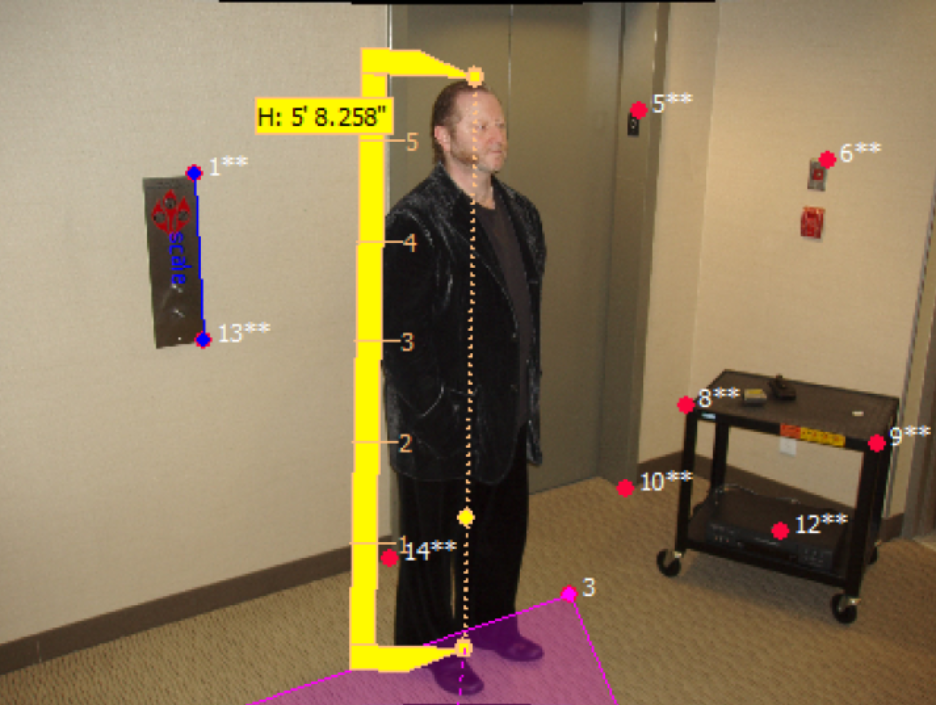
The Shift from Observation to Measurement
Traditionally investigators used manual measurement methods to assess crime scenes through direct site visits. The condition of scenes makes it impossible to maintain integrity while access to those locations may not be there at times.
Investigators can use Cognitech AutoMeasure 64 as a contemporary system which allows them to measure directly from the captured video and image material. The use of Photogrammetry allows users to measure distances between objects as well as their dimensions and the distances between different spatial elements.
The method has transformed crime scene video evaluation into a repeatable structured evaluation method which replaces subjective evaluation methods.
Measuring the Scene from Video Evidence
Photogrammetry systems enable users to extract actual measurements from visual content. Investigators can obtain measurable data from video material without needing any actual items from the location.
Crime scene investigators can use these tools to:
- Determine subject height and proportions
- Measure object dimensions within the scene
- Calculate distances, angles, and spatial relationships
The method guarantees that crime scene video analysis depends on actual measurable data which enhances investigation accuracy and consistency.
Single Frame vs Multi-View Analysis
Single Frame Measurement
Calibrated reference data enables measurement performance in situations where only a single image or frame is available. Dimensional estimates can be made from visual content even when the original camera is not present.
Multi-View Photogrammetry
Photogrammetry enables exact measurements through its analysis of multiple image perspectives when there are three or more frames. The process enhances measurement accuracy while providing precise details about the scene reconstruction.
The two methods enable crime scene video analysis through their ability to match evidence resources while delivering effective measurement results.
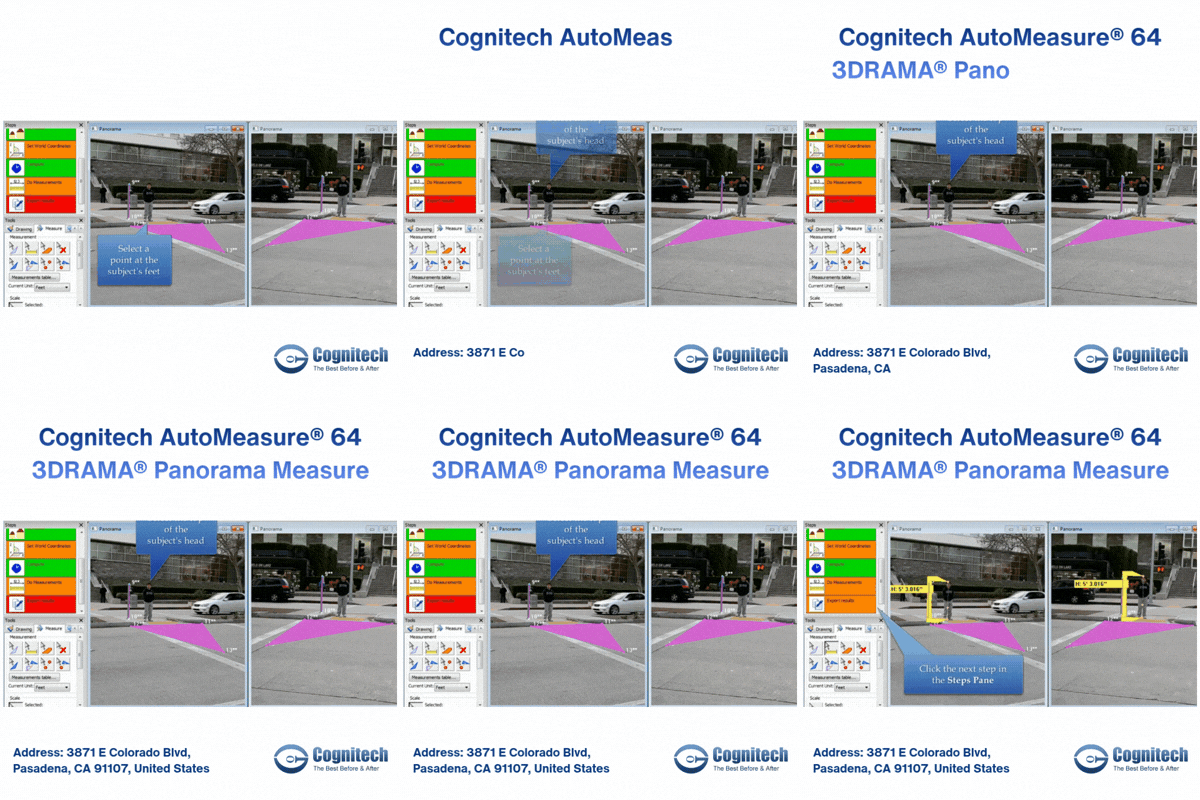
360° Scene Analysis and Reconstruction
The advanced photogrammetry systems enable investigators to conduct collaborative work through their ability to analyze both panoramic views and multiple image sources.
The study requires crime scene investigators to conduct spatial relationship assessments across broad regions while measuring points from different visual perspectives toward their total scene requirements.
Crime scene video analysis requires extended Photogrammetry capabilities to deliver comprehensive analysis results through duplicated analysis.
Camera Calibration and Measurement Accuracy
The process of accurate measuring needs proper understanding of how the image or video got recorded. Visual data needs camera calibration to achieve correct alignment between virtual space and actual physical dimensions.
Cognitech AutoMeasure 64 systems use calibration methods to:
- Correct lens distortion
- Determine camera parameters
- Improve measurement precision
Crime scene investigators need this system to draw all measurements from validated data which improves case analysis
Advanced Measurement Capabilities
The photogrammetry systems provide navigational pathways which enable users to extract accurate measurements from visual evidence because they offer structured equipment to execute this function. The investigators use measurement tools which let them analyze both images and video material.
The capabilities allow users to:
- Obtain linear measurements which include height and distance assessment
- Determine area and surface dimensions
- Execute angle measurements which are needed for spatial studies
- Conduct measurements which cover both point-to-point and plane-based methods
The measurements of the crime scene video analysis create a data-driven method which delivers actual measurements of its outcomes.
Working Without Physical Scene Access
The main benefit of photogrammetry systems enables users to examine evidence material without needing to go to the actual location.
Crime scene investigators can execute their responsibilities because they can:
- Perform measurements from stored media
- Reanalyze evidence at any time
- Apply updated techniques to existing data
The system ensures that Photogrammetry retains its ability to measure visual evidence through its continuous support system.
Integration with Forensic Workflows
The forensic workflow needs photogrammetry tools because they help achieve systematic analysis which enables all teams to conduct identical forensic investigations. The video processing systems and analytical systems work together to deliver accurate results throughout the entire investigation process.
The system enables forensic teams to sustain their standard operational protocols by utilizing crime scene video analysis which begins with initial review procedures and ends with measurement and reporting functions.
Bring Precision to Your Investigations
Final Thoughts
Forensic technology developed new methods for investigators to use visual evidence. The scientific method developed from basic visual observation to a scientific measurement and structured analytical method.
Photogrammetry enables investigators to extract exact measurements which lets them evaluate spatial relationships through their work with visual data. The method helps crime scene investigators to conduct better case evaluations, which leads to more trustworthy results.
Crime scene video analysis needs measurement-driven methods to maintain visual evidence of interpretation of accuracy and reliability according to established standards.
Talk with experts for Forensic video Processing Software and Forensic Image Processing Software solutions. Contact Cognitech! We hope you enjoyed this Blog! Stay tuned, and don’t miss the coming blogs. You can follow us on Twitter, Facebook, Instagram, Linkedin, or Youtube: we post Community Blogs regularly so you won’t miss any!
FAQs
- How does photogrammetry improve measurement from video evidence?
Photogrammetry also allows investigators to take real-world dimensions from images and video. This technique relies on the spatial relations between visual data to accurately measure distances, angles, and proportions without requiring physical access to the original scene.
- Can measurements be performed using only a single image?
Yes. Measurements can be made from one frame with proper reference or calibration. Multiple views improve accuracy. But investigators can still estimate the dimensions from visual data from one image.
- Why is camera calibration important in visual measurement?
Camera calibration makes sure that distortions and perspective errors are corrected before taking measurements. Doing this makes the results more accurate as it correlates visual data to a real-world scale, making results more reliable.
- What measurements can be obtained from images or video?
Investigators can measure distances and dimensions of objects, angles, and spatial relationships. These measurements turn visual evidence into structured data that can be analyzed in a consistent fashion.
- Is it possible to analyze a scene without visiting it physically?
Yes, we can reconstruct and measure a scene from visual data, without physical access to it. This enables investigators to review and analyze evidence as needed, even when the original location is no longer accessible.