
Real-Time Forensic Video Accuracy Through Camera Calibration and Lens Correction
Investigations today depend on digital video evidence which serves as their main foundation because investigators need complete footage to understand what occurred during incidents. The surveillance system creates measurement challenges because it produces distortion together with perspective mistakes and lens warping effects which make tracking difficult for investigators. The professional forensic video workflows depend on Camera Calibration together with lens correction because these two techniques transform distorted footage into court-approved evidence which can be used for reliable identification.
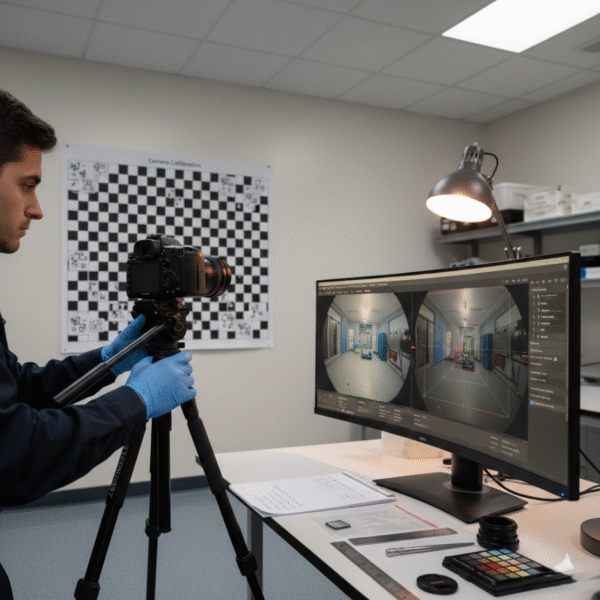
Why Calibration and Correction Matter in Forensic Video
The video recorded by a camera through wide-angle and fisheye lenses results in curved straight lines with inaccurate distance measurements. The process of height estimation for suspects at a crime scene and object distance measurement becomes unreliable because of this issue. Camera Calibration establishes the complete internal and external camera settings which allow investigators to transform pixel data into actual world locations with complete confidence.
Lens correction removes all geometric distortion which results from using lenses to produce visual evidence that shows the accurate shape and position of objects in the scene. The two processes create a geometric framework which forensic specialists need to conduct their measurements and reconstruction efforts.
Key Benefits of Camera Calibration
- Uses perspective restoration to achieve correct spatial analysis results
- Enables precise distance, height, and angle measurements
- Photogrammetry and scene reconstruction depend on this method as a precise measurement foundation
- Multi-camera investigations will achieve better results through improved consistency
- Defensive forensic results will be achieved through repeatable testing methods
How Modern Forensic Tools Perform Calibration
Advanced forensic video platforms automate much of the calibration process. Analysts can identify reference objects, apply calibration models, and validate results using known dimensions within the scene. The complete calibration process enables scientists to use video frame measurements as valid scientific evidence.
Professional forensic software integrates Camera Calibration directly into real-time and post-processing workflows. The system enables correction of geometric data which can then be used for enhancement and measurement and reconstruction processes without introducing extra errors.
The Role of Real-Time Lens Correction
Forensic platforms differ from traditional video editing tools because they focus on creating accurate results instead of producing appealing visual designs. The analysis process begins after lens correction removes all barrel distortion, fisheye effects, and perspective skew from the footage. Enhancement filters and measurement tools work on geometric accurate footage which requires maintenance of complete measurement precision.
Advantages of Real-Time Lens Correction
- Wide-angle and fisheye distortion gets eliminated instantly
- Live capture maintains its geometric integrity through this feature
- The process requires less time because post-processing work and manual adjustments get minimized
- Enhanced footage from the system will not develop new errors through the correction process
- The system will maintain its analytical performance across every individual frame.
- Real-time correction is crucial for evidence collection at both DVRs and live camera feeds because evidence needs immediate evaluation.

Practical Forensic Applications
Correct video correction lets investigators complete their duties which would have collapsed without video accuracy. Analysts who use Camera Calibration with lens correction techniques can perform spatial scene measurements right after they complete these techniques.
Common Forensic Use Cases
- The estimation of suspect height requires analysis of surveillance video footage
- The study of vehicle distance and trajectory requires analysis of vehicle movement
- The process requires multiple cameras to be aligned for video fusion purposes
- The crime scene reconstruction process creates visual representations of actual events
- The courtroom presentation of evidence requires precise overlays to be displayed according to established protocols
- Forensic professionals can now present scientific evidence through their work which enables them to move beyond personal judgments.
Best Practices for Defensible Results
Correction workflow becomes easier with modern software but appropriate methodology still needs to be followed. Analysts should provide permanent storage for original footage while they create a detailed record of every calibration and correction task they complete during their research.
Best practices include:
- Original media should be used for work from verified, lossless copies
- Calibration results should be verified through testing with established reference objects
- All lens correction parameters and workflows need to be documented
- Forensic reports must display both before and after images to showcase changes
- The documentation process creates transparent information which enhances expert testimony credibility through better transparency.
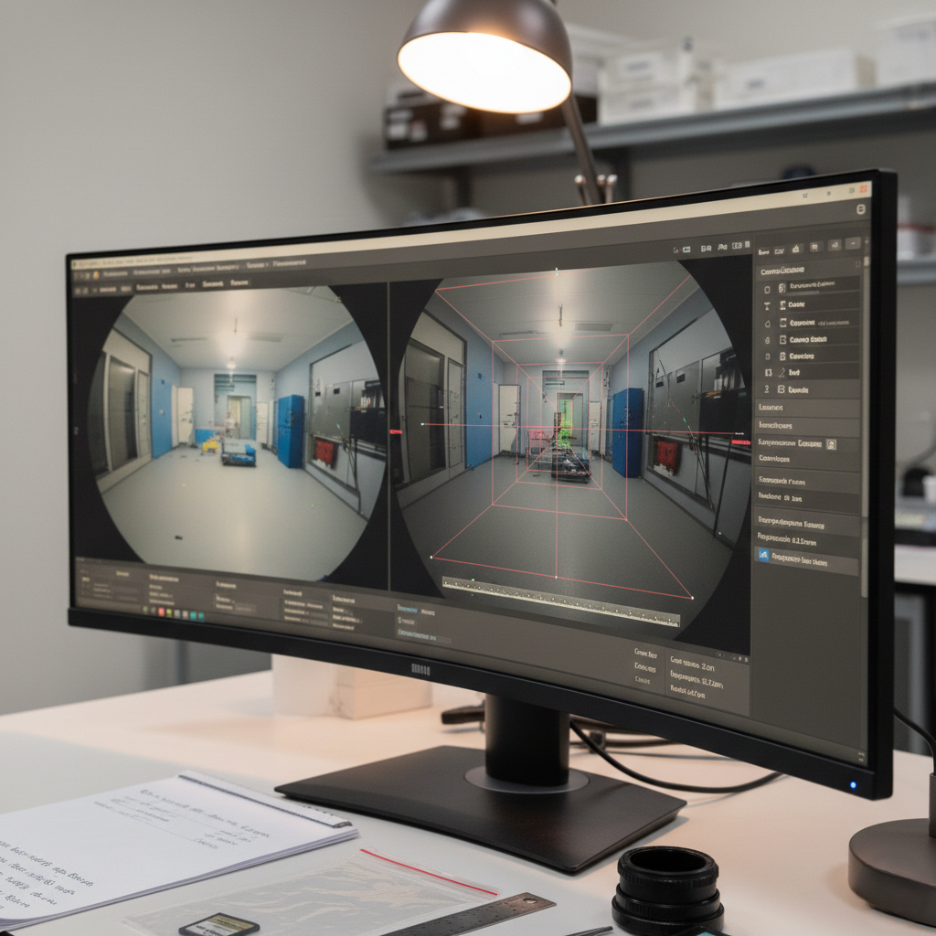
Real-Time Processing and Courtroom Readiness
Forensic platforms which support live capture with integrated Camera Calibration and lens correction enable analysts to accurately process evidence from its first acquisition moment. The process of conversion or re-encoding brings errors into the conversion process.
The combination of corrected and calibrated footage with other data sources enables the creation of immersive visualizations which judges and juries find easier to understand. The presenters will use visual tools to explain spatial evidence which includes complex spatial evidence.
Conclusion
The process of forensic video analysis begins with establishing accurate geometric measurements. The application of Camera Calibration together with precise lens correction enables investigators to transform distorted surveillance footage into credible evidence which can be measured. Real-time forensic workflows will benefit from these processes which need proper documentation to enhance investigation effectiveness and courtroom display of digital video evidence.
Talk with experts for Forensic video Processing Software and Forensic Image Processing Software solutions. Contact Cognitech! We hope you enjoyed this Blog! Stay tuned, and don’t miss the coming blogs. You can follow us on Twitter, Facebook, Instagram, Linkedin, or Youtube: we post Community Blogs regularly so you won’t miss any!
FAQs
- What is camera calibration?
Camera calibration estimates a camera’s intrinsic and extrinsicparameters, so pixels map to real-world coordinates, enabling accurate distance and angle measurements from video. - What does lens correction do?
Lens correction removes geometric distortion (barrel, pincushion, fisheye) so straight lines and proportions are restored essential before any quantitative measurement or photogrammetry. - Can these corrections be done in real time?
Yes. Modern forensic tools support real-time camera calibration and live lens correction, enabling immediate analysis while still providing logs for later validation. - What should be included in forensic reporting?
Include original vs corrected frames, calibration residuals/error estimates, reference object info, the exact correction parameters used, and a step-by-step log to ensure transparency and admissibility.