
Forensic Video Analysis Software: The New Standard
In today’s world, almost every investigation involves some form of video evidence, from security cameras to dashboard footage. But anyone who’s ever worked with real-world video knows it’s rarely crystal clear. It’s often grainy, low-light, or distorted, and the truth can be buried inside a few unclear frames. That’s where forensic video analysis software makes the difference.
Rather than treating video like just another piece of media, forensic tools treat it as evidence that must be examined carefully, preserved correctly, and presented accurately in court. That level of precision has now become the new standard in modern investigations.
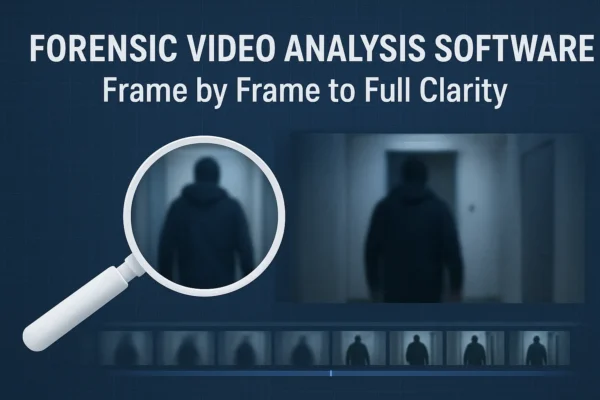
From Frame by Frame to Full Clarity
There was a time when analyzing video meant painstakingly going frame by frame through every second of footage. Investigators would spend hours isolating key details such as a reflection in a window, a license plate partially hidden by glare, or a subtle movement that could change the direction of a case.
Forensic video analysis software has taken that process and made it far more efficient. Instead of simply viewing footage, analysts can now enhance, stabilize, and clarify frames with scientific accuracy. Every change is measurable, repeatable, and verifiable, which is exactly what courts expect when dealing with visual evidence.
The Role of Video Investigator® 64
One of the most trusted tools in this field is Video Investigator® 64 by Cognitech. It is not designed for casual use; it is a professional forensic software suite built for analysts, law enforcement, and anyone handling sensitive video material.
What sets it apart is the combination of forensic precision and courtroom readiness. Every enhancement or adjustment made within the software is fully traceable, ensuring that no data is lost or altered beyond documentation. That chain of custody gives investigators the confidence to stand behind their findings under legal scrutiny.
Clear, Compliant, and Court Ready
Video evidence does not always come ready to share. In many cases, investigators are legally required to redact sensitive information before submitting or presenting footage. This could mean blurring faces, removing identifying features, or concealing private details in compliance with privacy laws and court orders.
Video Investigator® 64 includes powerful redaction and blocking tools that make this possible while maintaining the integrity of the original evidence. Portions of a video can be tracked and concealed using pixelation, blurring, or histogram adjustment, whichever method best fits the legal requirements of the case.
This ensures that investigators can deliver court-ready evidence that protects the privacy of individuals while still revealing the facts that matter most.
Beyond Face Redaction
Redacting faces is one of the most common uses for forensic video processing, but it is far from the only one. Sensitive information could be tattoos, license plates, ID badges, or anything else that could put privacy or the safety of witnesses at risk.
In complex cases, multiple individuals may appear in the same footage, and not all of them are subjects of the investigation. Cognitech’s tools allow the end-user to decide exactly which individuals should or should not be redacted. This selective control makes it easier to meet legal requirements without compromising the quality or clarity of the remaining footage.
By doing these things directly in the forensic environment, investigators don’t have to worry about the risks of exporting or converting video with outside editing software, which could change metadata or image quality.
Accuracy That Holds Up in Court
Every forensic analyst knows that the smallest visual detail can change everything. Whether it is a single frame showing a reflection, a hand movement, or a piece of evidence in the background, accuracy is everything.
Forensic video analysis software ensures that every step, from import to enhancement to export, is documented and verifiable. That is what gives the resulting footage its legal weight. Analysts can show not just what was found, but how it was found, with the full record to back it up.
In a courtroom, that transparency often carries as much weight as the evidence itself.
Frame by Frame to Full Clarity
Setting the New Standard
As the amount of digital video captured every day continues to grow, the need for reliable forensic tools has never been greater. Investigators face larger amounts of footage and tighter timelines, but the expectations for accuracy and privacy remain the same.
Cognitech’s Video Investigator® 64 has become the new standard in this space because it focuses on what matters most: clarity, compliance, and credibility. It helps analysts see what really happened, protect sensitive information, and maintain the chain of evidence every step of the way.
Final Thoughts
Trust is important for the future of investigations. People need to trust the evidence and the tools used to look at it. Forensic video analysis software helps you get from raw footage to the truth.
When handled through a trusted platform like Video Investigator® 64, every frame of video becomes a verified source of insight. It is not just about enhancing images; it is about ensuring that justice sees the full picture, one frame at a time.
FAQs
- What is forensic video analysis software?
Forensic video analysis software is designed to enhance, clarify, and prepare video evidence for investigations and legal proceedings while maintaining a verifiable chain of custody. - How does Video Investigator® 64 help investigators?
It allows professionals to examine video frame by frame, enhance clarity, and redact sensitive details such as faces or markings without altering the integrity of the original evidence. - Why is video redaction important in forensic analysis?
Redaction ensures that privacy laws and court regulations are respected by concealing sensitive information in footage before it is presented or shared. - Can Video Investigator® 64 be used in court cases?Yes. The software’s forensic workflow and documentation features make it good for use in court, where it is important to be open and honest about how video evidence is handled.