
Forensic Video Analysis Using Advanced Forensic Video Software
If you have ever worked with real surveillance footage, you already know the reality. Video evidence is rarely clean, clear, or easy to interpret. Cameras miss moments, lighting works against you, and compression artifacts seem to hide exactly what you are trying to see. That is why forensic video analysis is not about simply making footage look better. It is about carefully extracting usable evidence while protecting the integrity of the original video.
This is where advanced forensic video software becomes essential. Investigators do not need flashy effects or consumer editing tools. They need software designed specifically for forensic work, software that understands how video behaves in real investigative environments and gives analysts precise, reliable control.
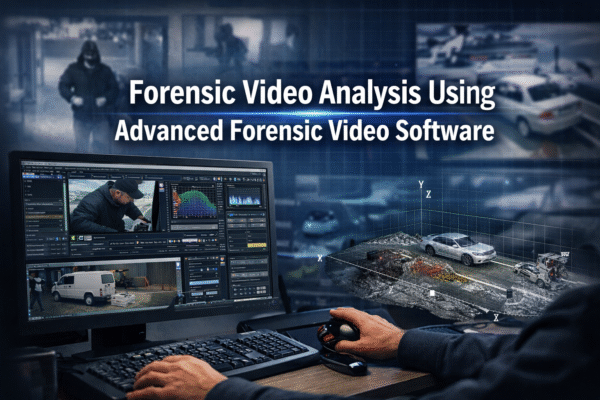
What forensic video analysis really involves
At its core, forensic video analysis is about answering specific and often difficult questions. What actually happened? Who was present? Where were they positioned? What details can be verified, and what cannot? The goal is clarity, not assumptions.
Video evidence can come from CCTV systems, mobile phones, or portable recording devices, and each source brings its own challenges. Frame rates vary. Resolution drops. Motion blur appears at the worst moments. Compression removes critical details. A proper forensic video analysis process accounts for all of this and focuses on accuracy instead of visual polish.
This is why professional investigators rely on forensic video software built specifically to process video as evidence, not as entertainment content.
Why specialized forensic video software matters
Standard video tools are not designed for investigative work. They apply global changes, overwrite data, and offer limited transparency into how results are achieved. In forensic environments, that lack of control is a serious problem.
Advanced forensic video software allows analysts to work non destructively, preserving original files while applying controlled enhancements for analysis. Every adjustment is intentional and explainable, which is critical when findings may be reviewed in legal or investigative settings.
More importantly, specialized forensic video analysis tools allow professionals to work at a deeper level, examining individual frames and specific regions within a frame instead of applying broad changes to the entire image.
Real time processing improves investigative workflow
One of the most important advancements in modern forensic video analysis is real time preview processing. Instead of making changes, rendering results, and waiting to see the outcome, analysts can view enhancements instantly.
This significantly improves workflow efficiency. Real time feedback allows investigators to compare results, refine settings, and make informed decisions quickly. It also reduces errors caused by trial and error processing.
When forensic video software responds intuitively, analysts can focus on interpreting evidence instead of struggling with the tools.

Working with video from multiple sources
In real investigations, video evidence does not come in neat, modern formats. Some footage is analog. Some are heavily compressed. Some come from older systems that are difficult to access. Effective forensic video analysis requires software capable of handling all of these scenarios.
Advanced forensic video software is designed to process both analog and digital video, as well as still images from CCTV cameras, phones, and portable devices. This flexibility is especially important in complex cases involving multiple cameras or mixed sources.
Consistent analysis across different formats helps investigators build a clearer and more accurate understanding of events.
Precision at the frame and region level
Not every part of a video frame needs the same treatment. Sometimes only a small area matters, such as a face in shadow, a fast moving object, or a distant detail. Advanced forensic video analysis tools allow investigators to apply individual parameters to specific regions within a frame.
This level of precision improves clarity without affecting the rest of the image. It also supports transparency, as enhancements are targeted and controlled rather than applied globally.
In forensic video analysis, precision is essential for maintaining credibility and trust in the results.
Advanced Tools for Serious Video Investigations
Analyze, enhance, and interpret video evidence using professional forensic video software.
Click HereExpanding analysis through 3D capabilities
Forensic video analysis goes beyond visual enhancement. In many cases, understanding spatial relationships is just as important. 3D analysis and photogrammetry allow investigators to examine distance, movement, and perspective using video evidence.
This is particularly useful in cases involving positioning, trajectories, or line of sight questions. When forensic video software includes 3D analysis tools, it helps investigators move beyond visual interpretation and toward measurable conclusions.
Confidence built on reliable software
At the end of the day, forensic video analysis is about confidence. Confidence in the process, confidence in the findings, and confidence in the tools used to reach conclusions. Advanced forensic video software empowers investigators to work faster, analyze more accurately, and present evidence with clarity.
When video evidence is handled with the right tools and careful methodology, it becomes reliable information. In forensic investigations, that reliability makes all the difference.
Talk with experts for Forensic video Processing Software and Forensic Image Processing Software solutions. Contact Cognitech! We hope you enjoyed this Blog! Stay tuned, and don’t miss the coming blogs. You can follow us on Twitter, Facebook, Instagram, Linkedin, or Youtube: we post Community Blogs regularly so you won’t miss any!
FAQs
1. What is forensic video analysis used for in investigations?
Forensic video analysis is used to examine, enhance, and interpret video evidence from sources like CCTV cameras, mobile phones, and portable recording devices. Investigators use it to clarify details, understand movement and positioning, and verify what actually occurred in an incident without altering the original evidence.
2. How is forensic video software different from standard video editing tools?
Forensic video software is designed specifically for evidence handling, not creative editing. It allows non destructive processing, precise control at the frame and region level, and transparent workflows that can be explained in investigative or legal settings. Standard video editors are not built with these requirements in mind.
3. Can forensic video analysis work with low quality or compressed footage?
Yes. One of the main purposes of forensic video analysis is to work with imperfect footage. Advanced forensic video software can process heavily compressed, low resolution, or analog video while preserving evidentiary integrity and improving clarity where possible.
4. Why is real time processing important in forensic video analysis?
Real time processing allows investigators to see the effects of enhancements immediately. This speeds up analysis, reduces trial and error, and helps analysts make more accurate decisions while working with video evidence, especially in time sensitive investigations.