
Frame Accuracy: Why Every Pixel Matters in Forensic Video
When most people watch a video, they see a story. When a forensic analyst watches a video, they see evidence.
That difference matters more than most people realize.
In forensic video analysis, frame accuracy is not a bonus feature. It is the backbone of reliable evidence. Every frame, every pixel, and every moment in time can influence how an investigation unfolds. A missing frame or altered pixel can raise doubts, weaken conclusions, or even cause evidence to be challenged in court.
That is why professionals rely on forensic video software built to preserve video exactly as it exists, not just make it look better
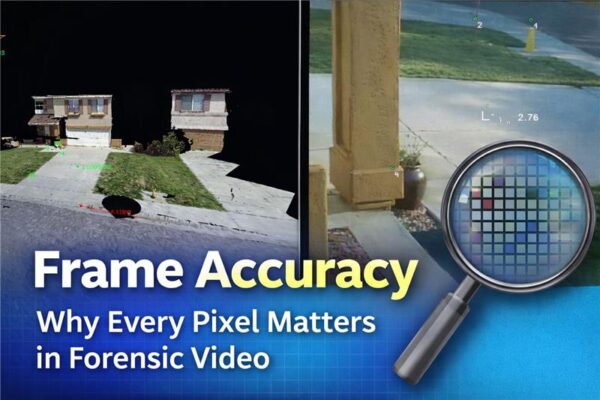
What Frame Accuracy Really Means
A video is not one moving picture. It is made up of thousands of still images called frames, shown one after another. These frames may appear every 25, 30, or even 60 times per second.
Frame accuracy means:
- Every frame is preserved
- Frames appear in the correct order
- Timing between frames stays exact
- No frames are skipped, blended, or duplicated
In forensic video analysis, analysts do not simply watch footage from start to finish. They step through videos frame by frame to study movement, actions, and changes over time. If frames are missing or altered, the analysis can no longer be trusted.
Why Every Pixel Matters
Pixels may be small, but in forensic work, they carry critical information.
A single pixel can:
- Help define the edge of a face or object
- Affect how a license plate character appears
- Show subtle motion between frames
- Reveal compression artifacts or tampering
Forensic video software is designed to examine footage at the pixel level. Instead of smoothing images or guessing missing details, it works to reveal what already exists in the video.
This is especially important when analysts need to explain exactly what they see and how they reached their conclusions.
Frame Accuracy and Courtroom Reliability
Video evidence is often challenged in court. Attorneys may question whether the footage was altered or handled correctly.
Common questions include:
- Was the video re-compressed?
- Were frames removed or added?
- Is the timing accurate?
- Can the analyst prove the video is authentic?
Frame-accurate forensic video software helps answer these questions. By preserving the original frame structure and timing, analysts can show that the video has not been changed. This strengthens the credibility of the evidence and supports expert testimony.
Enhancing Video Without Changing the Evidence
One common misunderstanding is that video enhancement changes evidence. In forensic work, that is not the goal.
Enhancement is about clarity, not creation.
Forensic video software uses controlled filters to:
- Reduce visual noise
- Improve contrast
- Clarify motion
- Highlight existing details
These tools analyze how pixels behave across multiple frames. Because the software relies on frame accuracy, enhancements are applied consistently and transparently. This ensures the original data remains intact and defensible.
Accurate Timing for Motion and Measurement
Frame accuracy also matters when analysts measure movement, speed, or position.
For example:
- Tracking a person or vehicle across frames
- Estimating speed based on frame timing
- Reconstructing the order of events
If the timing between frames is off, even slightly, measurements can become unreliable. Accurate frame timing ensures that calculations are based on real data, not assumptions.

Detecting Tampering and Compression Issues
Frame-accurate forensic video analysis can reveal problems that normal viewing misses.
These include:
- Duplicated frames
- Missing frames
- Uneven compression patterns
- Signs of re-encoding
By comparing pixels across frames, analysts can spot inconsistencies that may suggest editing or tampering. This level of scrutiny is only possible when video is processed without altering its original structure.
Why Frame Accuracy Builds Trust
At its core, forensic video analysis is about trust.
Trust that:
- The video represents what actually happened
- The analysis did not introduce changes
- The evidence can stand up to scrutiny
Frame accuracy supports that trust. It allows analysts to slow footage down, examine it closely, and explain findings clearly and confidently.
Every pixel tells part of the story.
Every frame connects those pixels over time.
In forensic investigations, accuracy is not optional. It is everything.
Talk with experts for Forensic video Processing Software and Forensic Image Processing Software solutions. Contact Cognitech! We hope you enjoyed this Blog! Stay tuned, and don’t miss the coming blogs. You can follow us on Twitter, Facebook, Instagram, Linkedin, or Youtube: we post Community Blogs regularly so you won’t miss any!
FAQs
- What is frame accuracy in forensic video analysis?
Frame accuracy means every video frame is preserved, displayed in the correct order, and timed precisely. In forensic video analysis, this ensures analysts can examine evidence without skipped, altered, or blended frames.
- Why is frame accuracy important in forensic video software?
Frame accuracy allows forensic video software to provide reliable playback, measurement, and enhancement without altering the original evidence. This is essential for investigations and legal review.
- Does forensic video enhancement change the original evidence?
No. Proper forensic video software enhances clarity by analyzing existing pixel data across frames. It does not add, remove, or fabricate details in the video.
- How does frame accuracy support court-admissible video evidence?
Frame accuracy preserves timing, pixel integrity, and video structure. This helps analysts defend their findings and demonstrate that the evidence has not been altered or manipulated.