
Video Enhancement Software for High-Accuracy Forensic Analysis
When you work with video in a forensic case, every small detail counts. A simple number on a license plate or a small mark on a suspect’s shirt can completely change the direction of an investigation. But the truth is, most videos you get are far from perfect. They might be from old CCTV cameras, shaky phones, or recordings in low light.
That’s why high-accuracy video enhancement software is so important. It helps reveal details that look hidden or blurry and turns messy footage into something much clearer and more useful.
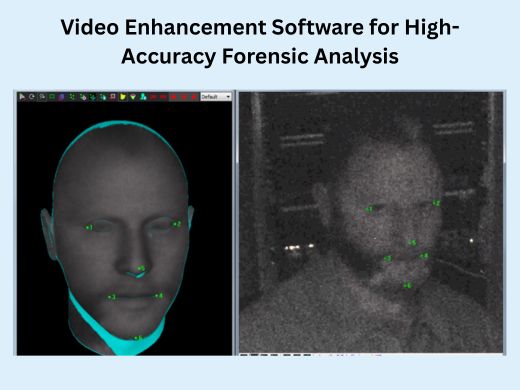
What Video Resolution Enhancement Actually Does
Video Resolution Enhancement is more than a technical buzzword. It’s a science-based method that recovers fine details that look lost in the original video. Even if a video looks blurry to your eyes, each frame still holds tiny bits of useful information.
This technology takes those small pieces and puts them together the right way. When done correctly, it rebuilds a clearer, sharper image using the data already inside the video not by guessing or faking the details.
How Cognitech’s FrameFusion® Changes the Game
Most basic tools simply “average” frames together. Yes, averaging can reduce noise, but it also softens important details. It’s like blending photos together you end up with something smooth, but not necessarily clear.
Cognitech’s Sub-Pixel Accurate FrameFusion® Reconstruction filter does something very different.
How It Works
- It pulls micro-details from nearby frames
- It fuses them at a sub-pixel level (smaller than what you can see)
- It creates a true higher-resolution result
- It works even when the subject is moving
That last part is huge. Traditional averaging only works when the scene is still. But real surveillance video almost always includes movement, people walking, cars driving by, cameras shaking. FrameFusion® is built for real-world chaos.
TriSuite64 and Its Sub-Pixel Reconstruction Power
Cognitech TriSuite64 brings all this science together in a practical tool for investigators.
Inside the software, you get:
- The FrameFusion® filter
- Cognitech’s Proprietary Sub-Pixel Accurate Reconstruction algorithm
- Advanced enhancement tools designed specifically for forensic work
Together, these tools can reveal details like:
- License plate numbers
- Clothing patterns
- Tattoos or markings
- Facial features
- Small identifying marks that matter in real cases
These may look small, but in forensic work, they can be the key to identifying a suspect or confirming a lead.
Why High-Accuracy Matters in Forensics
Forensic video enhancement isn’t the same as regular editing. You can’t just apply a random filter and hope for the best. Investigators need tools that are:
- Precise
- Scientific
- Repeatable
- Trustworthy
A detail that isn’t clear can’t be used with confidence. And an enhancement that isn’t accurate can lead to mistakes. That’s why forensic-grade software must follow strict scientific methods, not artistic effects.
Cognitech’s algorithms are built on years of research, field work, and real forensic cases. They’re designed to reveal real information, not invent details.
Built for Real Investigators, Not Just Tech Experts
Not everyone who works with forensic video is an engineer or a technician. Many professionals need quick, guided tools that get clear results without digging through complex settings.
TriSuite64 helps with:
- Guided workflows
- Filters that follow motion
- Tools designed for fast and accurate results
This means even under time pressure, investigators can extract high-quality details from low-quality footage.
Examples of Real-World Use Cases
High-accuracy forensic video enhancement is used in cases like:
- Hit-and-run investigations where license plates are blurred
- CCTV videos capturing a suspect walking or running
- Body-cam footage in fast-moving situations
- Low-light footage from parking lots or streets
In all of these cases, the original video may look unusable. But when multiple frames are fused together the right way, important clues suddenly appear.
Final Thoughts
At the end of the day, forensic video enhancement software is about more than technology. It’s about helping investigators see the details that matter. It’s about bringing clarity to footage that once looked impossible to work with. And most importantly, it’s about turning low-quality video into meaningful evidence that can support real cases.
If you work with video in any forensic role, high-accuracy enhancement tools aren’t just helpful they’re becoming essential.
Talk with experts for Forensic video Processing Software and Forensic Image Processing Software solutions. Contact Cognitech! We hope you enjoyed this Blog! Stay tuned, and don’t miss the coming blogs. You can follow us on Twitter, Facebook, Instagram, Linkedln, or Youtube: we post Community Blogs regularly so you won’t miss any!
FAQs
- What is forensic video enhancement?
Forensic video enhancement is the process of improving low-quality or unclear video so investigators can see important details like faces, license plates, or markings. - How does video enhancement software improve resolution?
It uses advanced algorithms that pull small bits of information from multiple frames and rebuild them into a clearer, sharper image without guessing or adding fake details. - What makes Cognitech’s FrameFusion® technology unique?
FrameFusion® works at a sub-pixel level and pulls details from nearby frames. It also works when subjects are moving, unlike basic averaging filters. - Can enhancement help with blurry license plates?
Yes. Tools like Sub-Pixel Accurate Reconstruction can recover fine details such as license plate numbers, even when the footage is noisy or recorded in low light. - Is enhanced video accurate enough for investigations?
Yes. When done with scientific methods, enhancement produces reliable and repeatable results that investigators can use with confidence.