
Video Forensic Analysis in Modern Digital Investigations
The digital age considers video recordings to be the most important evidence type. Investigators and legal professionals can use evidence recorded by surveillance cameras and smartphones, as well as body cameras and dashcams, which operate continuously to track all occurrences. The process of examining raw footage becomes challenging because its contents are either unclear or incomplete or require expertise to comprehend. The technique of video forensic analysis enables experts to acquire trustworthy data that confirms actual events.
Scientific procedures form the basis of digital investigations, which use scientific methods to determine authenticity and advance footage quality and recreate events. Forensic experts need to use advanced equipment and rigorous methods because the amount of video evidence keeps increasing to maintain the legal validity and authenticity of their work.
The Scientific Foundation of Video Forensic Analysis
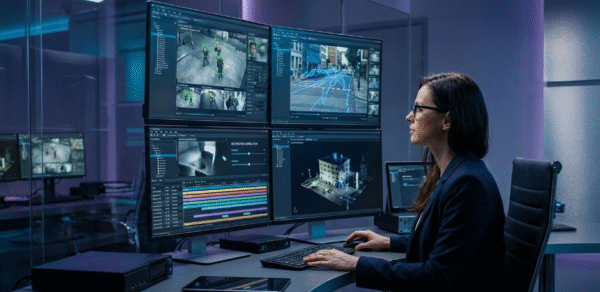
Video forensic analysis uses systematic methods to examine digital video data so that its content can be authenticated, and its clarity can be improved, and measurable data can be extracted. Forensic workflows use different methods than standard video editing processes because they must maintain original data integrity while creating a complete record of evidence of handling.
Forensic experts perform tasks such as examination, distortion correction, stabilization, and synchronization of multiple camera feeds. Through the process of video forensic analysis, investigators can discover the real identity of people who were present at the scene, determine the exact moment these events occurred, and recreate the specific movements they made. These methods find extensive application in criminal investigations and corporate security inquiries and national security operations.
Forensic analysis has evolved with technological advancements to integrate artificial intelligence and three-dimensional reconstruction methods, which increase the capabilities of investigators.
The Role of Video Analysis in Evidence Interpretation
The field of video analysis studies visual data to derive understanding about the behaviors and events and interactions present within the data. The technology finds its main uses in law enforcement and accident reconstruction and security monitoring roles. Analysts study motion patterns, environmental context, and interactions between subjects to reconstruct incidents accurately.
Modern video analysis tools allow users to synchronize multiple footage sources for creating an all-encompassing record of events that happened during that time. The capability becomes crucial when multiple cameras or locations need to be monitored during complex investigations. Modern video analysis tools perform tasks such as object tracking, facial recognition, and anomaly detection.
Video analysis requires human expertise because automation cannot replace the need for human experts who confirm findings and check compliance with legal requirements.

Forensic Video Software Is Essential
Forensic video software serves investigative and legal environments through its specialized design, which protects original evidence. The platforms of this industry differ from consumer video editing applications because they maintain original evidence during enhancement processes while enabling calibration and measurement tasks. The courtroom requires data integrity maintenance to ensure evidence remains admissible.
The system offers one major benefit because it enables users to handle proprietary CCTV and DVR formats while keeping the original file structure intact. The tools enable users to extract metadata while performing lossless compression and multi-camera synchronization tasks which assist in forensic workflows.
Advanced software platforms offer camera calibration, lens distortion correction, and spatial measurement capabilities. The tools provide investigators with the ability to determine distances and speeds and trajectories through scientific measurement methods.
Practical Uses of Video Forensic Analysis
Video forensic analysis serves criminal investigations to identify suspects and establish alibi verification and crime scene reconstruction. Investigators use enhanced footage to determine vehicle speeds and impact dynamics, which helps them reach conclusions about traffic accidents. Corporate security teams use forensic methods to investigate internal incidents and policy violations.
Government and intelligence agencies employ video forensic analysis to monitor security threats and analyze surveillance data. In courts, forensic experts establish the credibility of digital evidence through the presentation of scientifically validated findings obtained through their research.
Video Analysis in Security and Legal Contexts
Video analysis functions as an essential instrument that establishes timelines and verifies witness statements. Analysts can find inconsistencies through synchronized footage reviews while confirming factual sequences of events. Security staff monitor the entrances of the facility to detect illegal access and improve their understanding of the situation.
Artificial intelligence has significantly improved video analysis capabilities, enabling automated detection and classification of activities. The technology needs ethical oversight to protect privacy rights while ensuring responsible usage occurs
Forensic Video Software in Courtroom Applications
Forensic video software has gained adoption in forensic labs and courtroom settings to provide transparent processes that researchers can replicate. The platforms capture each processing step, which researchers use to verify their findings through independent testing. Advanced systems merge video data with photogrammetry and lidar information to construct three-dimensional models of specific events.
Forensic video software findings generate outcomes that courts consider because their results meet both scientific requirements and legal standards. The increasing occurrence of digital proof drives the need for professionals who possess certification in digital evidence and certified tools.
Ethical and Technical Considerations
The capabilities of video forensic analysis create substantial ethical challenges and technical limitations that need to be addressed. The process of footage enhancement requires people to maintain original content while creating improved visual quality. The expansion of surveillance technologies leads to privacy issues, which require organizations to comply with existing legal frameworks.
The Future of Video Forensic Analysis
The future of video forensic analysis will be transformed through the implementation of AI, automated systems, and advanced multimodal data integration technologies. Analysts will process larger datasets to achieve higher accuracy rates in identifying manipulated media and reconstructing events. The ongoing dominance of digital video in evidence collection will drive the need for both advanced video analysis techniques and dependable forensic video software solutions.
Conclusion
Digital video has become a cornerstone of modern investigations, but its value depends on scientific interpretation and validation. The process of video forensic analysis enables investigators to uncover facts from visual evidence through its established framework, which includes video analysis techniques and forensic video software platforms that allow them to handle evidence with precise accuracy. Forensic video science will continue to play a vital role in maintaining justice and security as technological progress proceeds into the future.
Talk with experts for Forensic video Processing Software and Forensic Image Processing Software solutions. Contact Cognitech! We hope you enjoyed this Blog! Stay tuned, and don’t miss the coming blogs. You can follow us on Twitter, Facebook, Instagram, Linkedin, or Youtube: we post Community Blogs regularly so you won’t miss any!
FAQs
Q1: What is Cognitech Video Active 64 used for in investigations?
Cognitech Video Active® 64 is a professional forensic video processing platform used to capture, enhance, and analyze digital and analog video evidence. It helps investigators extract critical visual details, synchronize multiple camera feeds, and ensure accurate playback for legal and forensic purposes.
Q2: How does Video Active 64 improve video forensic analysis accuracy?
The software offers real-time lossless capture, automatic demultiplexing of CCTV footage, and advanced enhancement tools. These features help preserve original data integrity while allowing analysts to clarify details such as motion, timing, and visual evidence for reliable forensic interpretation.
Q3: Can Video Active 64 handle multiple camera feeds?
Yes, Video Active 64 supports multi-channel video capture and processing. It can separate multiplexed CCTV footage into individual camera views and combine different video sources for synchronized playback, making it useful for reconstructing events from multiple perspectives.
Q4: Is VideoActive 64 suitable for courtroom evidence presentation?
Yes, the platform is designed for forensic and legal use. It supports lossless capture, frame-accurate playback, and documented processing workflows, helping experts present reliable and defensible video evidence in court proceedings.