
Real-Time Crime Scene Mapping via 3D Photogrammetry
When you think of modern crime scene investigation, your mind probably jumps to high-tech gadgets, detailed 3D reconstructions, and those precise digital recreations you see on crime shows. But behind the screens, there’s real science and some seriously advanced technology making that possible. One of the most fascinating tools in this space right now is 3D photogrammetry, and when combined with multi-channel fusion, it’s changing how investigators see and understand crime scenes in real time.
So, what does that actually mean? Let’s break it down.
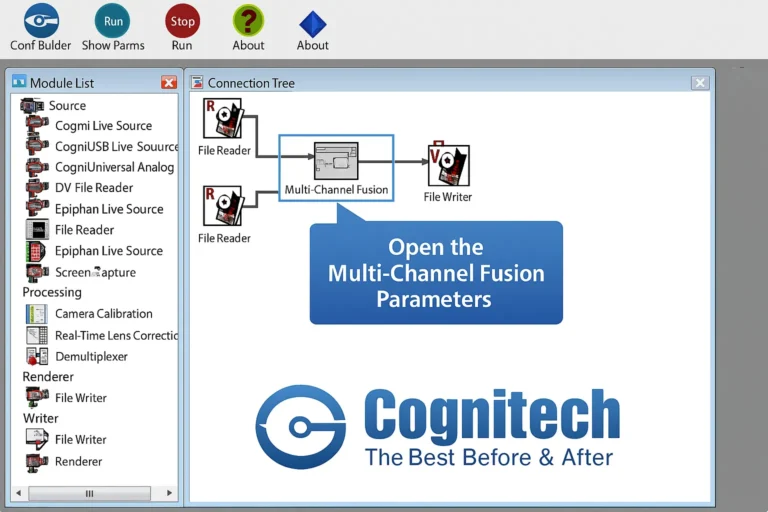
The Power of Multi-Channel Fusion
Imagine having multiple cameras recording the same event, like a street corner, from different angles. One camera might capture a side view, another might show the overhead street layout, and a third could be positioned across the road. On their own, each video tells part of the story. But when you fuse them together, you suddenly have a complete, synchronized, and spatially accurate view of what really happened.
That’s exactly what Multi-Channel Fusion does. It takes two or more videos from different viewpoints and uses perspective correction to align them into a single, unified scene. This process doesn’t just layer videos; it actually fuses their spatial information, allowing investigators to view synchronized footage as if it came from one intelligent system.
One of the most impressive applications of this is combining CCTV video with overhead photomaps, like Google Maps. This means analysts can play back video directly on a geographic map, seeing the exact positions of vehicles, people, and objects as they move through real-world space. It’s not just about visual clarity; it’s about context, accuracy, and actionable insight.
3D Photogrammetry: Turning Pixels into Measurable Space
Photogrammetry has been around for over a century, but 3D photogrammetry has taken it to a whole new level, especially in the world of forensics. Essentially, it’s the science of extracting three-dimensional measurements from photographs or video. Using multiple images taken from different viewpoints, software can calculate the precise dimensions and spatial relationships of objects in a scene.
Now, combine that with live video, and you have something revolutionary: live video reverse projection photogrammetry. This technique allows investigators to overlay live footage directly onto evidence images or 3D environments. It’s particularly powerful for on-site measurements, like determining the height of a suspect or the distance between two key points, without needing to physically revisit the scene.
Cognitech’s patented 3D photogrammetry technology takes this even further. With the integration of real-time video and 3D LIDAR scans, investigators can reconstruct crime scenes with astonishing accuracy, even after they’ve been cleared. The result is a fully navigable, measurable 3D model of the scene that syncs perfectly with live or recorded video footage.
LIDAR and the New Era of 3D Scanning
Over the past few years, 3D scanning has become more accessible thanks to advancements in LIDAR technology, a system that uses laser pulses to map environments in fine detail. What used to require expensive, specialized equipment is now achievable with portable scanners or even certain drones.
For forensic teams, by merging LIDAR-derived 3D scans with Cognitech’s 3D photogrammetry system, analysts can identify vehicles, objects, and even people within a video, not just visually but spatially. They can measure the height, distance, and movement of subjects within the scene with millimeter precision.
Beyond just reconstruction, this combination opens the door for kinematic analysis, measuring motion, speed, acceleration, and even physical forces. That means investigators can understand not just where things were, but how they moved and interacted. For instance, in a vehicle collision or pursuit, these tools can calculate speed and direction changes frame by frame, helping experts determine whether the movements align with eyewitness reports or physical evidence.
Why Real-Time Mapping Matters
Traditional video analysis is powerful, but it often requires painstaking frame-by-frame review and manual alignment. Real-time crime scene mapping changes that dynamic. It allows forensic experts to see data unfold as it happens, layering video, 3D maps, and photogrammetric measurements all at once.
This technology bridges the gap between raw footage and spatial analysis, giving law enforcement and forensic professionals a comprehensive, accurate, and interactive view of the scene. It’s not just about visualization; it’s about truth reconstruction, creating an environment where every detail is measurable and verifiable.
Reconstruct the Truth in Real Time
Final Thoughts
The integration of Multi-Channel Fusion, 3D Photogrammetry, and LIDAR scanning represents one of the most exciting advancements in forensic video analysis today. It’s transforming how investigators collect, visualize, and interpret evidence, turning complex, multi-angle footage into a single, coherent story of what truly happened.
In a field where precision and reliability can make or break a case, Cognitech’s innovations are redefining what’s possible. Real-time crime scene mapping isn’t just the future of forensics; it’s the new standard for uncovering the truth.
Talk with experts for Forensic video Processing Software and Forensic Image Processing Software solutions. Contact Cognitech! We hope you enjoyed this Blog! Stay tuned, and don’t miss the coming blogs. You can follow us on Twitter, Facebook, Instagram, Linkedln, or Youtube: we post Community Blogs regularly so you won’t miss any!
FAQs
- What is 3D photogrammetry in forensic analysis?
3D photogrammetry is a technique that uses photographs or video frames from multiple angles to create accurate, measurable 3D models of a scene. In forensics, it helps investigators reconstruct crime scenes and analyze physical evidence without physically revisiting the location. - How does Multi-Channel Fusion enhance forensic video analysis?
Multi-Channel Fusion combines video footage from multiple cameras or viewpoints into one unified scene. It corrects perspective differences, aligns spatial data, and allows investigators to visualize events from multiple angles at once for more reliable analysis. - What is live video reverse projection photogrammetry?
Live video reverse projection photogrammetry overlays live or recorded video onto 3D evidence images or scene reconstructions. This helps investigators measure heights, distances, and movements in real time, directly on the evidence model. - How does Cognitech use LIDAR with 3D photogrammetry?
Cognitech integrates LIDAR-based 3D scans with its patented photogrammetry technology to create highly accurate, real-world reconstructions of crime scenes. This allows forensic experts to measure, analyze, and visualize evidence spatially, improving case accuracy and insight.